
Do scientists want to make GMO humans?
May 6, 2026
Related Topics: Genetic engineering, CRISPR, Gene therapy
A curious high school student from California asks:
"What do scientists think about the controversial issue of using CRISPR to edit human genomes?"
Whether it is acceptable to edit a human genome is a complicated question, and the answer depends on the specific details of how it is being edited and why. In general, gene editing limited to specific cells within a consenting patient to treat a disease is considered acceptable, while editing the entire genome of a person before they are born is unethical. Doctors and scientists must consider the moral, ethical, and societal consequences of gene editing before ever using it to edit a human genome.
What is CRISPR?
Although CRISPR is often thought to be the tool used to edit DNA, it actually refers to the biological phenomenon that allowed scientists to discover a new genome editing tool. CRISPR stands for Clustered Regularly Interspaced Short Palindromic Repeats.1 These are repeated sequences found in the DNA of bacteria and archaea (another type of microscopic organism).
The actual tools used to edit DNA are CRISPR-associated proteins, also known as Cas proteins. These proteins are nucleases, meaning they cut nucleic acids like DNA and RNA. Cas proteins are able to recognize specific nucleic acid sequences using an RNA guide and then make cuts at sites where that sequence is present.
The actual tools used to edit DNA are CRISPR-associated proteins, also known as Cas proteins. These proteins are nucleases, meaning they cut nucleic acids like DNA and RNA. Cas proteins are able to recognize specific nucleic acid sequences using an RNA guide and then make cuts at sites where that sequence is present.
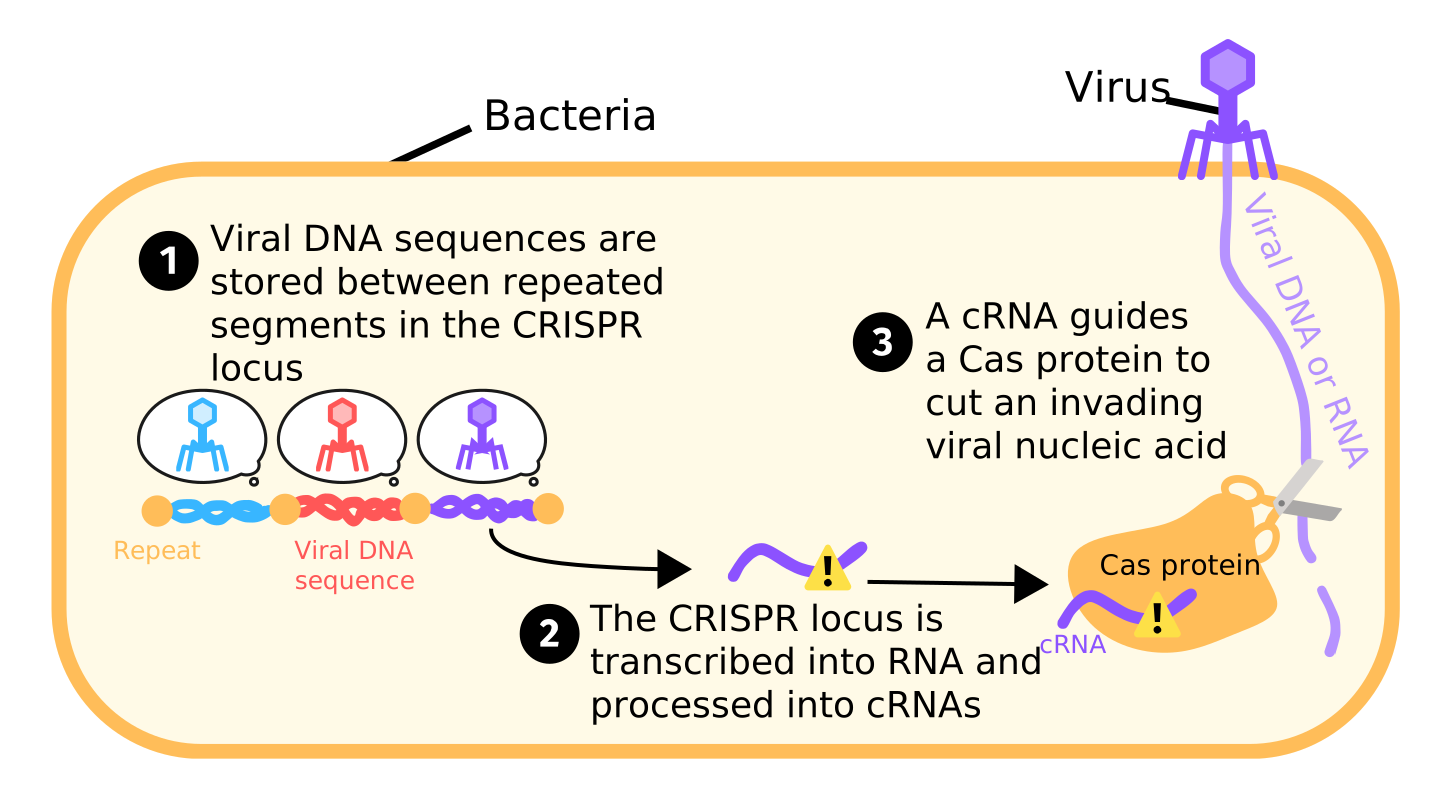
In bacteria, CRISPR and Cas proteins serve as a kind of immune system to protect the bacteria from viral infections.2 When a virus infects a cell, it introduces viral nucleic acids that can integrate into the genome of the infected cell. This means viruses are also able to do gene editing, and as a result, they are often used by scientists for research purposes! To protect against viral nucleic acids, bacteria store their sequences in CRISPR, which are then used to make RNA guides for Cas proteins. The Cas proteins can then cut nucleic acids that viruses try to introduce into the cell.2
Even though CRISPR is a bacterial system, scientists use CRISPR-Cas protein-inspired tools to edit DNA in non-bacterial cells.
What CRISPR-Cas protein tools exist to edit DNA?
In 2012, a groundbreaking scientific paper was published introducing CRISPR/Cas9, a discovery that led authors Jennifer Doudna and Emmanuelle Charpentier to win a Nobel Prize and has since revolutionized science and medicine.3 CRISPR/Cas9 consists of the Cas9 protein (a Cas protein that can create double-strand breaks in DNA) and a single guide RNA (sgRNA). The sgRNA is designed to guide Cas9 to a specific gene sequence within the DNA, where it cuts to create a DNA double-strand break. Cells fix these cuts through double-strand break repair mechanisms.
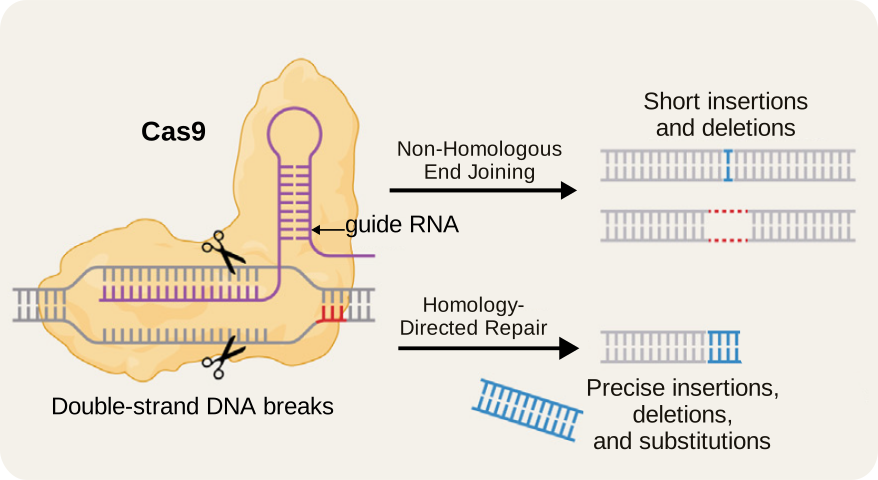
The most common repair mechanism, Non-homologous end joining (NHEJ) is error-prone, so new sequences are introduced into the DNA at the cut site. This typically breaks the gene so it can no longer make a functional protein product.4
Scientists have also developed more advanced CRISPR/Cas protein tools to edit genes without making them nonfunctional. For instance, a DNA template can be introduced into the cell to facilitate another form of DNA break repair, Homology Directed Repair (HDR), which allows the template sequence to be inserted into the DNA.
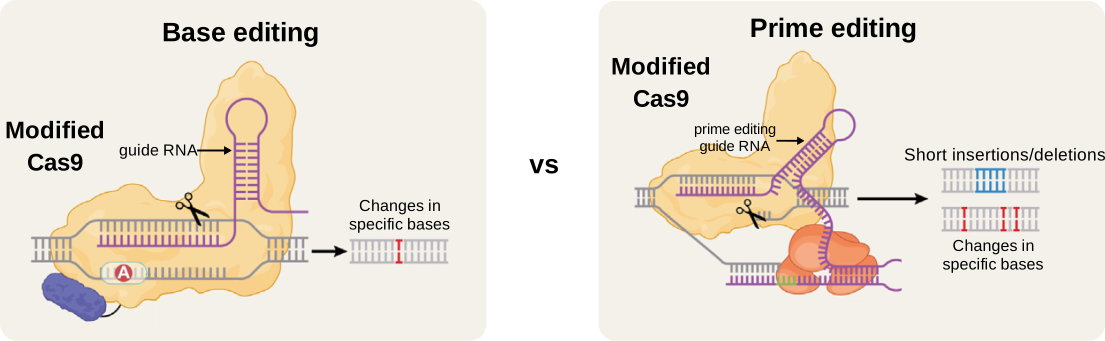
As another tool, Cas9 can be edited so that it no longer makes double strand breaks in the DNA, and can then be fused to another protein that edits DNA bases. Thus, Cas9 guides the other protein to a specific DNA site, where it edits a single base on the DNA.5 These Cas9 fusion proteins are called base editors.
Prime editors are a third type of CRISPR/Cas protein tool where an edited Cas9 is fused to a reverse transcriptase protein and a modified guide RNA called a prime-editing guide RNA (pegRNA).5 Prime editors can not only edit single DNA bases, but also create insertions or deletions of short sequences into the DNA.2
Can CRISPR/Cas9 be used to edit human genomes?
To use CRISPR for gene editing, the CRISPR/Cas protein tool must be present within the cell whose DNA will be edited. Given that an adult human has roughly 28-36 trillion cells, it is impossible to edit every cell within a person using currently available CRISPR/Cas protein technology.6
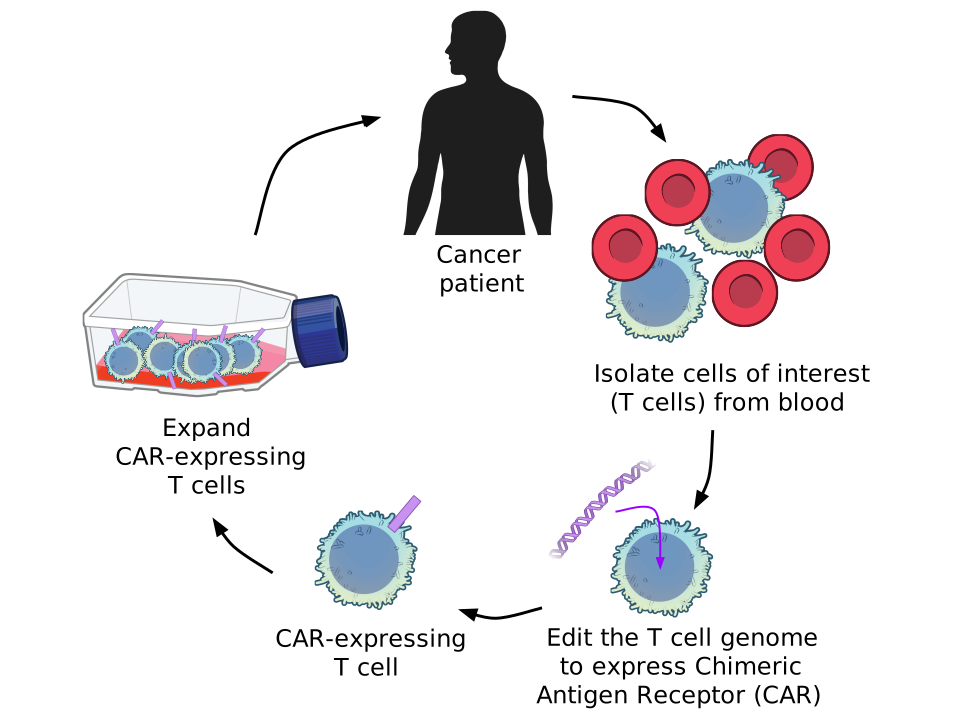
Instead, a patient's cells can be removed, maintained, and edited outside of the patient before re-introducing them to the patient, or the CRISPR/Cas protein can be delivered (usually as DNA encoding the CRISPR/Cas protein machinery) to the tissue containing cells to be edited.7 Therefore, a few of the patients cells are genetically edited in a targeted way to treat disease, but the overwhelming majority of cells are unedited and contain the person’s original genetic information.
What about making genetically modified humans?
Controversially, it is technically possible to perform human “germline” genome editing–meaning, one can edit the genome of cells within a human embryo at an early stage when it is only made of a few cells. These cells then divide to form a fully developed human where the vast majority of cells contain the edited genome.8 For this type of genome editing, it is impossible to receive consent from the edited individual since the edits occur before they are born. Additionally, the edits made through this method are in the germline, and thus can be passed on to the edited person’s offspring. This means the action of genome editing impacts not just the edited individual, but also all of their future descendants. Therefore, “germline” genome editing is considered unethical by the scientific community and is broadly illegal.
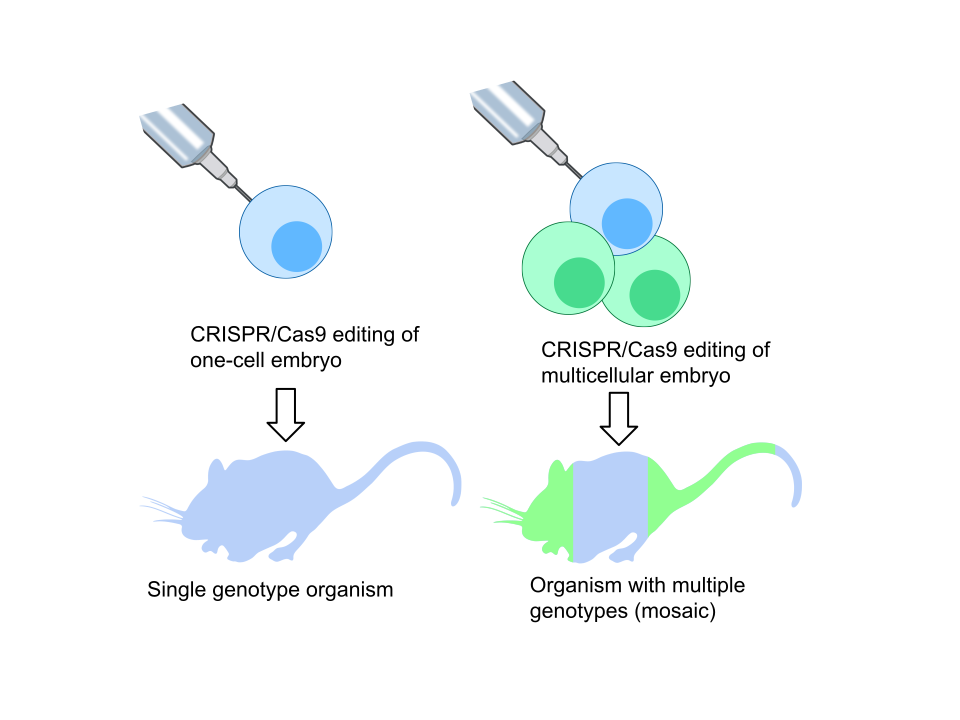
There is only one known case of human germline genome editing ever occurring. In this case, a scientist called He Jiankui edited human embryos by attempting to delete a specific part of the CCR5 gene to make it non-functional.8 The goal of this work was to make babies resistant to HIV, which often uses CCR5 to infect healthy cells.
He’s work was not successful, causing unintended edits in the CCR5 gene. Additionally, the resulting genetically edited babies (a set of twins) were mosaics, where some of their cells contained the edits and others did not. Additionally, in one of the twins, only one copy of the CCR5 gene was edited while the other remained unedited.8 The details of He’s work remain unclear, but He was dismissed from his faculty position at the Southern University of Science and Technology, fined, and imprisoned for his actions.9,10
Due to the ethical implications of human germline genome editing, United States government regulations currently prevent using federal funding for human germline genome editing. The 1996 Dickey-Wicker amendment prevents agencies under the US Department of Health and Human Services, including the National Institute of Health (NIH) from funding research in which human embryos are created, destroyed, or put at risk of damage.11
Additionally, any privately funded human germline genome editing would require approval by the US Food and Drug Administration (FDA). In 2018, Congress passed a Consolidated Appropriations Act that makes the FDA unable to receive or review applications for drugs, products, or research proposing creation of human embryos or introduction of heritable genetic modifications to a human embryo.12, 13 Thus, human germline genome editing is currently effectively prohibited in the United States.
How has human genome editing been used ethically to treat disease?
Although human germline genome editing is not supported by United States federal policies, CRISPR/Cas9-based gene therapies targeting specific cells in patients have been used to effectively treat human disease. For example, a therapy called Casgevy was the first CRISPR/Cas9-based therapy approved by the FDA. This therapy is designed to treat patients with Sickle Cell Disease (SCD), a disease in which a mutation in the HBB gene leads to defective hemoglobin production. Casgevy uses CRISPR/Cas9 to target BCL11A, a gene whose product prevents fetal hemoglobin production after birth.14 Casgevy involves isolating and editing a patient’s hematopoietic stem and progenitor cells, reactivating production of fetal hemoglobin in those cells so the SCD patient can then have functional hemoglobin.14
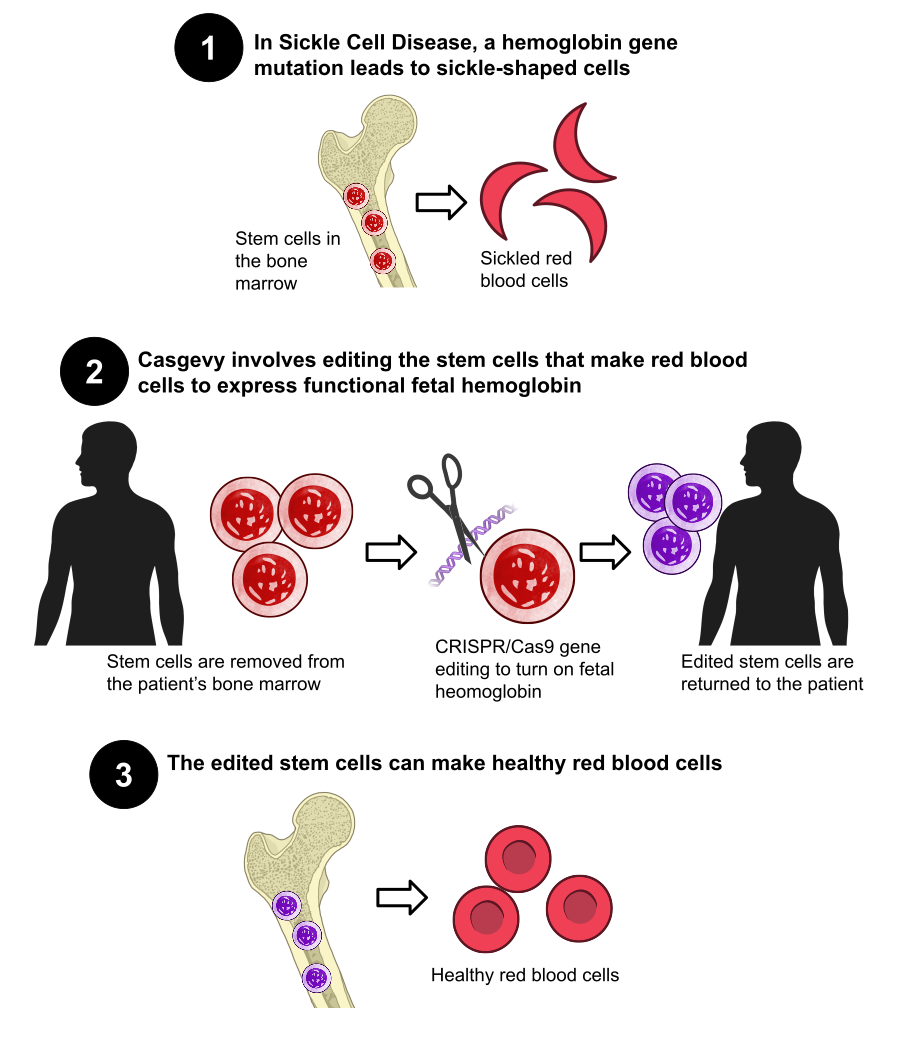
The treatment was found to prevent vaso-occlusive crises (painful clogs in circulation) severe enough to cause hospitalizations in patients throughout its phase three clinical trial, and overall improved the health-related quality of life of SCD patients.14, 15 Thus, Casgevy serves as an example of how CRISPR/Cas9 can be used to edit human genomes in ways that treat disease and improve the lives of many patients while avoiding the ethical controversies of causing heritable genetic alterations.
Read More:
- References Wang, J. Y. and Doudna, J. A. “CRISPR technology: A decade of genome editing is only the beginning.” Science 2023. Pacesa, M., Pelea, O., and Jinek, M.. “Past, present, and future of CRISPR genome editing technologies.” Cell 2024. Jinek, M. et al. “A Programmable Dual-RNA–Guided DNA Endonuclease in Adaptive Bacterial Immunity.” Science 2012. Li, T. et al. “CRISPR/Cas9 therapeutics: progress and prospects.” Signal Transduction and Targeted Therapy 2023. Kantor, A., McClements, M. E., and MacLaren, R. E. “CRISPR-Cas9 DNA Base-Editing and Prime-Editing.” International Journal of Molecular Sciences 2020. Hatton, I. A. et al. “The human cell count and size distribution.” PNAS 2023. Uddin, F., Rudin, C. M., and Sen, T. “CRISPR Gene Therapy: Applications, Limitations, and Implications for the Future.” Frontiers in Oncology 2020. Greely, H. T. “CRISPR’d babies: human germline genome editing in the ‘He Jiankui affair’.” Journal of Law and Biosciences 2019. Normile, D. “Chinese scientist who produced genetically altered babies sentenced to 3 years in jail.” Science Insider 2019. Cyranoski, D. “What CRISPR-baby prison sentences mean for research.” Nature news 2020. NIH Office of Science Policy. “NIH Policy for Research involving Human Embryos.” 2026. Gallo, M. E. and Sarata, A. K. “Advanced Gene Editing: CRISPR-Cas9.” US Library of Congress, 2018. US 114th Congress. “Public Law 114-113-Dec. 18, 2015: Consolidated Appropriations Act, 2016.” Frangoul, H. et al. “Exagamglogene Autotemcel for Severe Sickle Cell Disease.” The New England Journal of Medicine 2024. Sharma, A. et al. “Improvements in health-related quality of life in patients with severe sickle cell disease after exagamglogene autotemcel.” Blood Advances 2025.

Author: Isabela Fuentes
This answer was written and published in 2026, when Isabela was a PhD student studying lung adenocarcinoma and alveolar stem cells in the labs of Dr. Peter Jackson and Dr. Tushar Desai. Isabela wrote this while participating in the Stanford at The Tech program.