
Beyond A, B, O: Why is our blood type positive or negative?
July 15, 2025
Related Topics: Blood type, Rh factor, Autosomal recessive inheritance, Punnett squares, Dominant and recessive
A curious adult from South Dakota asks:
"I'm trying to find out why I'm the only one that has B- blood but both my parents and all of my siblings have positive blood so why was I the only one that has RH negative blood?"
Blood type is based on molecules found on the surface of red blood cells. Some of these molecules are carbohydrates, while others are proteins.
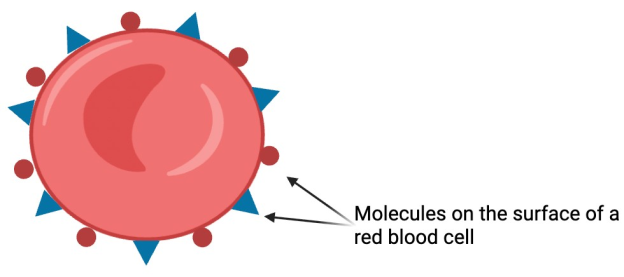
There are two main ways we classify blood:
(1) By looking at the presence and/or absence of A and B carbohydrates, which determine the A/B/O blood type
And
(2) By looking at the presence or absence of the Rhesus D protein (or Rh factor), which determines if the blood is Rh+ or Rh-.
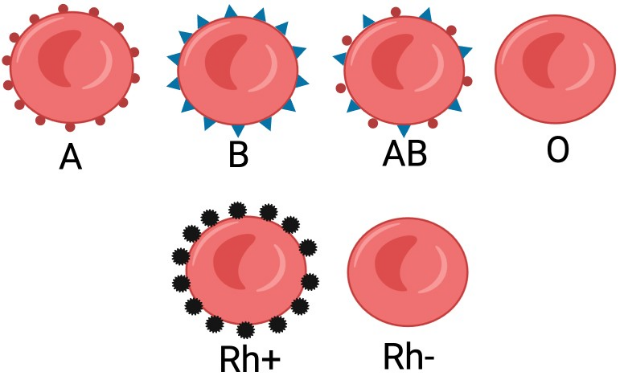
What does it mean to be Rh-negative or Rh-positive?
The “Rh” in Rh-negative/Rh-positive refers to the Rhesus D protein. The Rhesus D gene exists on chromosome 1 and it provides the body with the instructions needed to make this protein.1 The presence of the Rh factor is a dominant trait, while its absence is a recessive trait.
As humans, we have two copies of each gene. Dominant traits only require one copy of a gene to be expressed, while recessive traits require two copies of a gene to be expressed. Since the absence of Rh factor is a recessive trait, this means that, in Rh- individuals, the Rhesus D gene has been deleted or is non-functional in both chromosome copies.
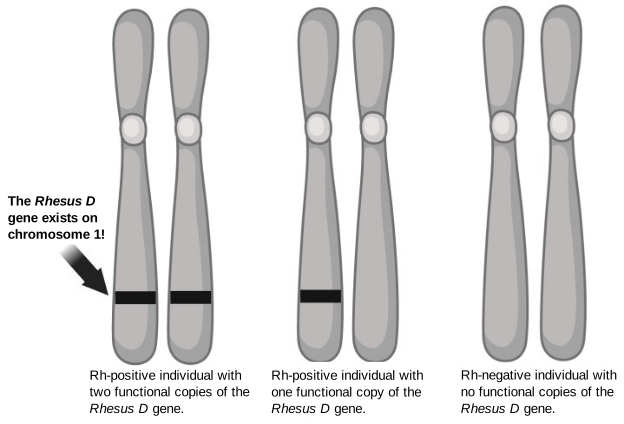
Because Rh status is inherited through our genes, an individual will inherit their Rh status from their parents! Because the presence of the Rh factor is a dominant trait, this means that if at least one parent passes on a functional copy of the Rhesus D gene, then their child will be Rh+.
If Rh status is passed down from the prior generation, how can two Rh-positive parents have an Rh-negative child?
Remember, the presence of the Rh factor is dominant, so only one functional Rhesus D gene is needed for an individual to be Rh-positive. This means that an individual could have one functional and one non-functional version of the Rhesus D gene without realizing it!
A blood test would just tell them they are Rh+. When someone has two different versions of one gene, we say they are heterozygous for that gene.
If both parents are heterozygous for Rhesus D, then it is possible for them to have a child that inherits no functional copies of the Rhesus D gene and is Rh-negative. If only one parent is heterozygous for Rhesus D and the other is homozygous - has two copies of the same version of one gene - for Rhesus D, it is not possible for their child to be Rh-negative.
To show how this works, we can use a helpful genetics tool called a Punnett square. A Punnett square is a diagram used in genetics to predict the probability that a child will inherit a trait from their parents. Each parent’s gene combinations are listed on the outside of the square, and inside of the square are the possible combinations that they could pass on to their child.
For example, if both parents are heterozygous for Rhesus D, this can be represented with a D - the functional gene - and with a d - the non-functional gene - on the outside of the square. The inside of the square is divided into four and each of the smaller squares includes either a D or d from each parent to represent all of the possible combinations of the parents’ genes. The Punnett square predicts that one out of four children of two heterozygous parents will be Rh-, meaning they will inherit two copies of Chromosome 1 with non-functional or missing copies of the Rhesus D gene, dd.
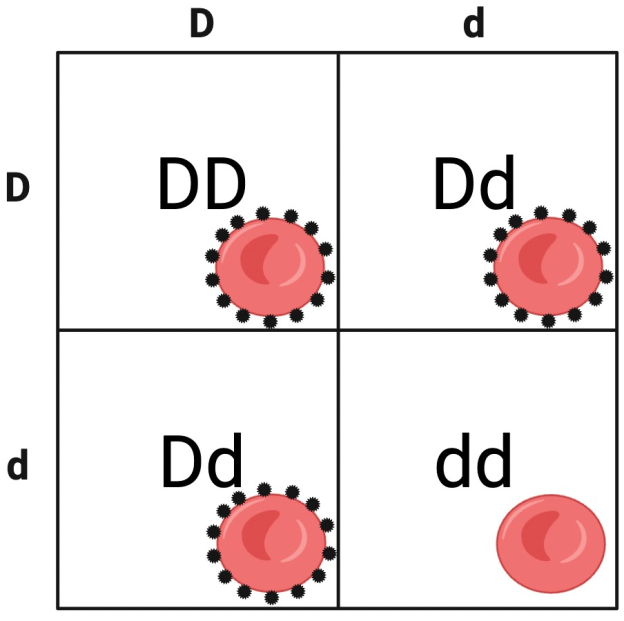
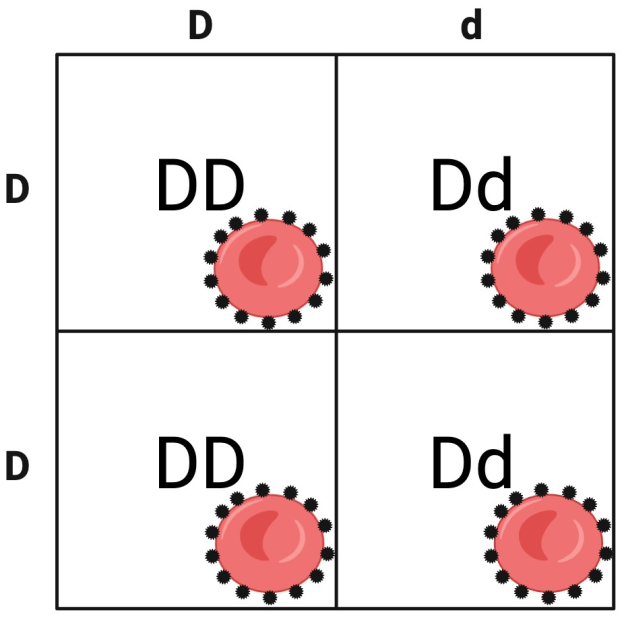
In conclusion, being Rh-negative is a recessive trait! Parents that are Rh-positive and heterozygous can have children that are Rh-negative. Because being Rh-negative is less likely than being Rh-positive, it is not uncommon for only one sibling (like yourself!) to be Rh-negative.
Read More:
- References Christensen, R.D. (2018). 81 - Neonatal Erythrocyte Disorders. Avery’s Diseases of the Newborn: Tenth Edition. Elsevier, p. 1152-1179.e4. ISBN 9780323401395. https://doi.org/10.1016/B978-0-323-40139-5.00081-4

Author: Nim Robles
Nim is a Ph.D. student in the Department of Biology, studying how hybrid incompatibilities influence speciation in Molly Schumer’s laboratory. Nim wrote this answer while participating in the Stanford at The Tech program.